THE EDGE Blog


Oct. 21, 2025

North Carolina Brokerage Strategically Partners with Leading SE Missouri Firm


+


NORTH CAROLINA BROKERAGE ERA LIVE MOORE STRATEGICALLY PARTNERS WITH MISSOURI FIRM TO SUPPORT GROWTH AND EXPANSION


Southeast Missouri Market Leader Becomes ERA Powered to Increase Market Share and Expand Service Area into St. Louis Metro


Charlotte, N.C. (Oct. 21, 2025) ERA Live Moore in North Carolina today announced the firm has made a strategic investment in Missouri-based Edge Realty, which will now do business as Edge Realty ERA Powered.  This investment marks a creative collaboration aimed at supporting Edge Realty’s growth opportunities in Southeast Missouri while preserving the company’s distinct identity and leadership.



Both ERA Live Moore and Edge Realty ERA Powered will continue to operate their powerful brands with their respective leadership.  With this announcement, the combined operations now include 13 offices with more than 600 agents who were responsible for a combined $1.4 billion in sales volume and approximately 3,200 transactions in 2024.


Established in 2003, Edge Realty is the local market leader with nearly 45% market share.  The family-owned and operated, full service brokerage also has affiliated mortgage, title, and property management services.  Founder and owner Bill Cole serves as Managing Broker along with his wife, Susan, and son Chris, whose wife Jessica is an agent with the firm.  The Coles' daughter Katie is a loan officer with their affiliated mortgage company, while her husband Matt Palisch also serves as an Edge Managing Broker.


ERA Live Moore is also a full-service brokerage with an award-winning relocation division, as well as established title and mortgage partners.  Founded in 1999, the company is led by qualifying broker/owner Tania Moore and her husband Eb Moore.  Over the last 10 years, they have leveraged strategic M&As to expand across North Carolina from its Charlotte home base to Raleigh-Durham, Winston-Salem, Asheville, Cornelius, Marion, Wilkesboro and Jacksonville.  They also have a presence in Fort Mill, S.C.


“Based on our successful expansion in the Carolinas, we were excited to look further afield for strategic partners who were also interested in growth and expansion,” said Tania Moore. “When we learned that the Coles were at a point where they wanted their independent firm to belong to something bigger that would support their agents' growth and business expansion, we knew we had found compatible partners who shared our business philosophies and were equally focused on the future.”


“We were very attracted to ERA Live Moore’s guiding philosophy of empowering dreams through real estate in an environment that cultivates excellence and a sense of belonging,” explained Bill Cole.  “As a family-run business, it was important to partner with a like-minded family company that puts agents at the forefront.  We have always said that if we do right by our agents, they will do right by their clients.  We embraced the opportunity to join forces with ERA Live Moore to help elevate our agents with all of the top-notch ERA tools and technology while providing the company with a launchpad for expansion.”


“The real secret to this alliance is that Bill and I are both St. Louis born and bred,” said Eb Moore. “And while we attended rival high schools two miles apart and never met until this year, it was as if we had known each other all of our lives.  We share an inherent trust in each other and truly feel that we belong together as an extension of our shared value of inclusion.”


“Our new relationship with ERA Live Moore provides incredible opportunities for our agents that we could not provide as an independent brokerage,” said Matt Palisch.  “Equipping them with ERA’s extensive suite of business building tools, technology, and platforms will help them bring their business to the next level, while giving them access to ERA’s uniquely collaborative network and international referral base.”


Under this new structure, Edge Realty ERA Powered will continue to operate independently under its well-respected brand with the Coles and Palisch at the helm.  ERA Live Moore will provide additional resources, operational support, and technology tools to help Edge Realty ERA Powered scale its success and serve clients even more effectively.  This investment reflects ERA Live Moore’s broader strategy to partner with best-in-class real estate firms that share a passion for service excellence and local expertise.


Media Inquiries:

Tania Moore

ERA Live Moore

tania.moore@eralivemoore.com


About ERA Live Moore

ERA Live Moore is an independently owned and operated franchise affiliate of ERA Real Estate.  We believe that our core business values of collaboration, innovation, diversity and growth are needed more than ever. As a global leader in the residential real estate industry for over 50 years, ERA features a powerful network of like-minded entrepreneurs supported by the brand’s game-changing technology, products and powerful lead generation.


About Edge Realty

Founded in 2003, Edge Realty is the leading real estate brokerage in Southeast Missouri by sales volume and transaction count.  Edge Realty is a full-service real estate brokerage with affiliated mortgage, title, and property management divisions.  Integrity, professionalism, ethical business practices, education and training, and unparalleled expertise are our brand standards.


About ERA Real Estate

The ERA Real Estate network includes more than 43,000 affiliated brokers and independent sales associates and approximately 2,200 offices throughout the United States and 36 other countries and territories.


ERA Franchise Systems LLC (www.ERA.com) which operates the ERA Real Estate system, is a subsidiary of Anywhere Real Estate Inc. (NYSE: HOUS), a global provider of real estate services. ERA Real Estate information is available at www.ERA.com.


© 2025 ERA Franchise Systems LLC.  All rights reserved. ERA® and the ERA Logo are registered service marks owned by ERA Franchise Systems LLC. ERA Franchise Systems LLC

Posted in Brokerage, News
Aug. 20, 2024

NAR Practice Change FAQ

In our previous post, we highlighted some changes that recently took place for REALTOR members.  In March, the National Association of REALTORS reached a deal to settle a series of lawsuits which targeted the primary way real estate agents get paid -- via cooperative compensation. 

Below is an FAQ for your reference.  As always, please call or email one of our agents or shoot us a message at hello@goedgerealty.com with any questions.

What were the lawsuits about?

A group of law firms filed the initial case in Illinois federal court, claiming that MLS and industry rules amounted to a "conspiracy" to fix commissions.  Last fall, a jury agreed in one of the Missouri copycat lawsuits and awarded $1.8 billion to the plaintiffs. 

To summarize, the lawsuits were claiming that the otherwise legal practice of a listing broker offering to split part of the compensation in the MLS with a buyers broker served to keep commissions artificially high.  By publishing offers of compensation in the MLS, it was alleged that buyers were being steered away from properties offering low compensation rather than a buyer negotiating for its buyer broker services directly.

Edge Realty has been a member of NAR since 2003, but we do not have a fixed fee, nor have we ever had an agreement with anyone to keep fees at a certain amount.  There are many compensation models out there in the marketplace, and we have not heard of an instance where a buyer represented by Edge Realty was steered away from a home they otherwise might have been interested in.  Edge Realty takes the fiduciary duties we owe to our buyer clients very seriously.

How many lawsuits were there?

There were more than 20 lawsuits across the country covering a wide range of geographical areas.  The original case was filed in 2019.  Many were copycat class actions filed more recently after the initial verdict was handed down.  Most were brought by plaintiff attorneys representing home sellers, but a few were brought by home buyers claiming they indirectly paid a higher purchase price than they otherwise would have.   

Who was sued?

NAR was a defendant in all of them, but each suit has collectively targeted different defendants -- some MLSs, some local and state REALTOR associations, some national franchisors, and some national and regional brokerages.  Not every defendant was covered by the settlement.

Who was covered and who was not?

All REALTORS were covered by the settlement, as were brokerage firms with 2022 transaction volume of $2 billion or less.  REALTOR-owned MLSs were also covered.  However, brokerages with 2022 transaction volume exceeding $2 billion had to opt into the settlement or reach a separate settlement agreement, some of which may become public soon.  Edge Realty was not sued.

Were there any problems with the trial?

NAR and other defendants could have appealed the case based on a few potential judge errors.  Namely, an allegation of "price fixing" is generally looked at by a court as a "per se" antitrust violations, meaning the existence of the alleged conduct would be price fixing on its face.  However, depending on the facts of each case, a court can review an antitrust allegation with a "rule of reason" standard of review, which means even though the alleged conduct existed, there could be other factors which make the conduct pro-competitive and pro-consumer.  In this case, NAR and other defendants would have taken the position on appeal that the MLS structure is pro-consumer and pro-competition, leading to faster sales and opening up the market to all buyers who want representation from a buyer's agent.  The judge also did not allow evidence to be admitted that the practice of sharing compensation between brokers is legal in all 50 states, including in Missouri where the first trial was held. 

Importantly, the Department of Justice, which is charged with enforcing antitrust laws, has said many times in the past that cooperative compensation is pro-consumer and pro-competition.  Rather than appeal, however, NAR and many of the defendants settled the case and agreed upon several new practice changes.

What were the agreed upon practice changes and when do they take effect?

The agreed upon rule changes took effect on August 17, 2024.  They include:

  • Offers of compensation to buyer's agents will no longer be displayed on the MLS or in IDX (MLS-sourced) data feeds to third party portals.
  • Buyers need to sign an agreement to work with a buyer's agent prior to touring a home, something that is already required in 18 states.  This agreement may take many forms, but it must clearly state the compensation to be paid to the buyer's agent (which can be paid by the buyer, the seller, or shared with the buyer's agent with the listing broker).
  • Agents will not be able to collect more compensation from any source that is great than what is in the buyer's agreement.

How will buyer's agents get paid now?

There are several ways a buyer can still engage a buyer's agent to your advantage and compensate the buyer's agent, any and all of which may be used simultaneously:

  • Buyers may pay their agent and brokerage firm directly.
  • Sellers can agreed to pay the buyer's agent as part of the offer or offer concessions that the buyer may use to pay the agent.
  • Listing brokers may still make offers of compensation to buyer's agents (just not on the MLS platform).

So is cooperative compensation going away or not?

No, cooperative compensation remains legal in all 50 states.  Offers of compensation are just no longer allowed to be published on the MLS, in light of the alleged "steering" fear noted above.  Sellers can still allow listing brokers to share part of the overall compensation with buyer's agents, and agents are allowed to communicate that via email, text, phone call, social media, brokerage website, signage, etc.  The key takeaway is that commission and splits, if any, should be negotiated between sellers and buyers in their respective brokerage agreements (listing agreements prior to listing and buyer's agency contracts prior to showing). 

Will my financing be affected?

No.  As of recently, USDA, FHA, and conventional loan types are not considering any concessions given to a buyer for a buyer's agent fee as part of the "interested party contributions" a seller can otherwise give to a buyer for other costs -- such as title fees, closing costs, appraisals, inspections, surveys, repairs, etc.   VA loans used to prohibit a VA buyer from paying their agent, but VA has also followed suit and will allow a buyer to pay their agent directly or indirectly.

Why should I use a buyer's agent?

Prior to the early 1990s, any buyer who worked with a real estate agent to find a property was actually not receiving buyer representation or the fiduciary duties that are commonly set forth in today's agency laws.  Rather, every agent worked directly or indirectly for the seller, regardless of which brokerage had the listing.  Through this lens, brokers splitting commission was never given much of a thought, as both agents represented the seller and were splitting the work (and therefore the fee) on the seller's behalf. 

As buyer's agency laws evolved and became more popular in the late 1990s and 2000s, a small minority of sellers felt it wasn't right for them to pay a second agent who didn't represent them.  Various lawsuits targeted this "new" buyer's agency practice, but courts, the Federal Trade Commission, and the Department of Justice routinely supported the notion that sharing compensation was very consumer-friendly, leading to informed consumers, faster sales, and potentially for more money. 

Purchasing real estate is one of the largest financial transactions that most people will undertake in their lifetime.  For over 30 years, real estate laws have been protecting buyers to make sure they have access to representation, rather than a real estate agent representing a seller directly or as a subagent.  Buyer's agents have become a trusted source of competent representation, market expertise, advice, guidance, regulatory/legal compliance, negotiation, and general transaction coordination for buyers.  There are plenty of anecdotal accounts of unbeknownst buyers losing money because they did not do certain inspections, did not know what to do when, or because they did not have a professional, trained eye looking at the pertinent aspects of the transaction.

Aug. 18, 2024

NAR Practice Changes - August 2024

By now, many consumers have probably heard about changes coming to the real estate industry, some of which took place on August 1, 2024 and others which took place on August 17, 2024.  After several years of controversial litigation, copycat lawsuits, and misleading headlines targeting the century-old, legal practice of real estate brokers sharing commissions via "offers of compensation" advertised in the Multiple Listing Service (the "MLS"), the National Association of REALTORS has agreed to a few MLS practice changes in a consolidated settlement of the cases.  

Here's what the changes mean for both Buyers and Sellers:

Background

The MLS has always functioned as an ecosystem for agents and brokers to share real estate data, pertinent documents, and available inventory, as well as the offers of compensation that listing brokers were willing to share with cooperating brokers for bringing a buyer to a transaction.  Listing agreements nationwide have typically included "cooperation + compensation" components, whereby listing brokers were authorized to share part of the overall compensation with one of thousands of cooperating brokers who may have a buyer client for the property.  If no cooperating broker was involved, the listing broker essentially had the jobs of two agents, and therefore received the entire commission.  

Prior to the early 1990s, however, any buyer who worked with a real estate agent to find a property was actually not receiving buyer representation or the fiduciary duties that are commonly set forth in today's agency laws.  Rather, every agent worked directly or indirectly for the seller.  Through this lens, brokers splitting commission was never given much of a thought, as both agents represented the seller and were splitting the work (and therefore the fee) on the seller's behalf. 

As buyer's agency evolved and became more popular in the late 1990s and 2000s, a small minority of sellers felt it wasn't right for them to pay a second agent who didn't represent them.  Various lawsuits targeted this "new" buyer's agency practice, but courts and the Department of Justice routinely supported the notion that sharing compensation was very consumer-friendly, leading to informed consumers, faster sales, and potentially for more money. 

After 30+ years and various unsuccessful lawsuits, one group of law firms landed on an allegation that the structure and rules of the MLS amounted to "price fixing."  After several years of discovery in a major copycat case in Missouri, a jury determined that "price fixing" had occurred simply based on the mere existence of an MLS rule that "required" an offer of compensation (which could have been $0) to be made to cooperating brokers as a condition of listing on the MLS.  In many markets, these offers of compensation were somewhat consistent, but NAR and REALTORS never had any agreement or understanding that fees would be fixed.  Indeed, commissions have never been fixed and there is no data to suggest they have been.  Nevertheless, the plaintiffs won a verdict, which led to a consolidated settlement of the other cases and several related rule changes.  

Sellers

So what has changed for sellers?  Truthfully, as much or as little as desired and agreed upon between you and your agent.  Real estate fees and commission rates remain negotiable, as is the portion (if any) that you authorize your listing agent to share with cooperating brokers.  That is and always has been the case.

You still have the choice of allowing your listing broker to share compensation (or not) with one of thousands of cooperating brokers who may be working with the buyer of your property.  Your approval and the amount must be conspicuously stated in writing (typically in your listing agreement).

If you choose to allow an offer of compensation, one of the new rules is that the offer cannot be communicated on the MLS.  The concern cited by plaintiffs was that buyers were being "steered" from properties that were offering lower payouts.  However, the evidence of this alleged practice was slim.  Offers of compensation can still be communicated in other ways, such as text, email, phone, and other off-MLS advertising.  You also have the option to indicate to a buyer that you will offer concessions so that they may be able to pay their agent, or offer nothing at all.

Some brokerages are no longer allowing offers of compensation in their listings.  We believe these brokerages are wholly misguided, as studies have shown that sharing offers of compensation fosters an efficient, robust market where everyone gets fair treatment and representation.

You do not have to allow an offer of compensation, but you may be missing out on a larger buyer pool and a quicker sale by not engaging the entire buyer market.  Many buyers want to work with their own agent, and if there is no offer of compensation, many buyers likely will not have the money to pay their own agent because their cash is going towards their down payment, inspections, survey, appraisal, loan fees, title fees, and other closing costs.

Some listing agents may agree to a certain listing fee knowing that many buyers and buyer's agents will attempt to negotiate the buyer's agent fee into the contract.  This is another strategy you could use.  You have choices.  However, be sure you thoroughly understand the terms of your listing agreement before you agree to not allow an offer of compensation.  It could end up costing you more than anticipated.

Buyers

So what has changed for buyers?  Only a couple of rules, but the practical effects could be drastic. 

Purchasing real estate is one of the largest financial transactions that most people will undertake in their lifetime.  For over 30 years, the real estate industry has been protecting real estate buyers with buyer's agency laws designed to make sure buyers have representation rather than a real estate agent representing a seller directly or as a subagent.  Buyer's agents have become a trusted source of market expertise, advice, guidance, regulatory/legal compliance, negotiation, and general transaction coordination for buyers.

There are two main MLS rule changes that will effect buyers: (1) offers of compensation are no longer displayed on the MLS, so buyer's agents will not be as able to readily ascertain offered commission amounts, and (2) buyers must sign an agreement prior to touring a property.  The agreement can take many forms -- it can be for initial showings only, limited in scope in other ways, or a full buyer's agency relationship.  The fee can be $0, per showing, flat fee, or percentage of purchase price; but it must be specific and not open-ended.  It can be for a short term or for a longer period.  This flexibility has always been the case, but the agreement didn't need to be signed up front.  Now, it must be signed prior to touring.  However, this is not to say that your agency relationship can't be changed to allow for additional services or fees in the future.

Today, when you are working with a buyer's agent, that agent represents your interests and owes you strict duties of confidentiality, loyalty, accounting, and disclosure, among other duties, as well as general competency in the areas and types of real estate you are searching for.  In exchange for bringing a buyer to a transaction, buyer's agents have traditionally been paid by way of an offer of compensation from a listing broker (and indirectly, from a seller). 

Even if there is not an offer of compensation on a listing you are interested in, the buyer's agent commission can still be negotiated into a contract and paid by the listing broker or seller.  You may also pay your buyer's agent directly, or a buyer's agent may be paid by way of a combination of all of the above.  You, too, have choices.  No buyer should feel forced to work directly with a listing agent if they want their own representation. 

Our buyer's and seller's agents are here to help craft a listing agreement that suits your needs and wishes.  If you have any questions about these industry changes, please feel free to reach out at hello@goedgerealty.com.

May 17, 2023

Why Off-Market "Pocket Listings" Are Bad For Homebuyers and Sellers

SELLERS SHOULD CAREFULLY CONSIDER WHETHER TO ALLOW AN AGENT TO LIST THEIR HOME "OFF-MARKET" OR "OFF-MLS"

It could cost sellers thousands (if not tens of thousands) of dollars.  Here's why:

Like any market, the real estate market is generally driven by straightforward supply and demand principles.  In over-simplified terms, when supply is high and demand is low, prices tend to drop, and when supply is low and demand is high, prices tend to spike.  It is no secret that the real estate market has been closer to the latter over the past few years.  The coronavirus pandemic fueled what was already a low interest rate, low inflation environment, and even lower interest rates and rising "stay-at-home"-driven demand turned a fairly steady market into a very hot one all across the nation.

But for any market to be efficient, and for sellers in the marketplace to reap the benefits of said efficient (hot) market, ALL market participants must be aware of ALL available inventory.  Historically speaking, REALTORS have used the Multiple Listing Service (MLS) to present the entire pool of inventory to buyers.  In hot real estate markets, all buyers being able to see the entire inventory often leads to multiple offers and higher sale prices.  Higher sale prices, of course, means more net proceeds for sellers.


OFF-MARKET LISTINGS: A HARMFUL LISTING STRATEGY

In rare instances, there could be a valid reason to keep a property off the MLS, and to instead opt for a private, limited market.  For instance, maybe a seller has legitimate privacy concerns because they are famous or are a public figure.  Or perhaps elderly or sick persons, or small children reside in the home and a lot of showings would be disruptive to the household.  

Outside of those limited reasons, keeping a property off-market does not benefit home sellers, and it instead serves to line the pockets of their listing brokerage.  When a property is only marketed to the listing brokerage's limited pool of buyers, the market is drastically smaller, and the listing brokerage stands to make the entire commission rather than splitting the commission with a cooperating brokerage that might have a better, more qualified buyer.  Indeed, the general public and cooperating brokerages are not notified of the listed property's existence, and therefore the vast majority of buyers are not aware the listing even exists.

Again, this can dramatically harm sellers to the tune of thousands (if not tens of thousands) of dollars in the form of lower sale prices and/or months of additional holding costs.  Edge Realty has seen multiple offer situations over the past few years resulting in sale prices as much as $75,000 over list price, which would not have occurred in private, off-market scenarios. 

That is why it is Edge Realty's policy to use off-market listings only in the extremely limited scenarios listed above.  We believe that presenting a home to the entire market, in its best possible light, from the very first impression, is the key to maximizing sale prices for our seller clients. 

EDGE REALTY WILL NOT STOOP TO THE NEW LOW TACTIC OF KEEPING LISTINGS PRIVATE FOR OUR FINANCIAL GAIN

Traditionally, the most beneficial listing strategy for sellers is to market the property to the entire market - on the MLS.  The MLS is the most complete collection of homes for sale and it is generally recognized as the most efficient vehicle for selling homes for the most amount of money in the shortest amount of time.  MLS listings feed to thousands of public-facing websites, which results in increased exposure to buyers and licensed agents who represent active, willing-and-able buyers - not just to the handful of buyers the listing brokerage might be actively working with.

Absent extenuating circumstances, why would a seller not want to reach the entire market?  Sellers should be very cautious of what a listing broker is asking them to do, especially if keeping the property off-market is mentioned.  Sellers should ask themselves if doing so really benefits them, or if it is designed to benefit the listing brokerage.  It is quite possible that what the listing brokerage is doing violates the National Association of REALTOR Code of Ethics, federal and state Fair Housing laws, Missouri real estate regulations, the common law fiduciary duty of loyalty, and MLS rules.  

At Edge Realty, we passionately put our clients - and not our wallets - first.  If you want to maximize your net sale proceeds, don't list with a brokerage that tries to convince you to participate in an off-market transaction.  Instead, call a highly qualified Edge Realty agent who puts your interests first.

July 26, 2022

Edge Realty Invited to Join Leading Real Estate Companies of the World

FOR IMMEDIATE RELEASE:

We’re Local. We’re Global.®

An established leader in the Southeast Missouri market, Edge Realty’s reach now extends far beyond the Southeast Missouri area through its membership in Leading Real Estate Companies of the World®, the largest global community of high-quality, independent real estate companies.

Membership in Leading Real Estate Companies of the World®, or “LeadingRE”, is awarded only to select, market-leading companies that have demonstrated excellence in service delivery and results. 

“In an industry made up of over 100,000 brokerages characterized by dramatically inconsistent service delivery and customer experience, our members set the standard for quality in the markets they serve,” said LeadingRE President/CEO Paul Boomsma. “We take our commitment to quality very seriously, and, as a result, only 20% of the companies that inquire about membership are extended an invitation to affiliate.”

The value of being aligned with LeadingRE, however, is much more than just a discerning third-party endorsement. LeadingRE members have access to world-class resources for marketing, technology, and professional development.  

Through its membership, Edge Realty has valuable connections to the best real estate professionals in 70 countries around the world. These connections bring global exposure and a broader pool of prospective buyers for the homes Edge Realty represents. And, for those looking for real estate outside of the area, Edge Realty can provide assistance through LeadingRE’s worldwide network of 550 vetted real estate firms.

“Our affiliation with LeadingRE provides us with the same, if not better, national and global network that a member of a national franchise might enjoy, all while allowing us to remain independent, innovative, and nimble in response to market changes or evolving business models,” said Edge Realty owner Bill Cole.

While all LeadingRE companies, brokers, and sales associates have a shared focus on quality and connections, they are also committed to independence, with distinctive cultures and services that align with the unique needs of the areas they serve.

“All of our firms are deeply rooted in their communities – independently owned, with an uncommon local knowledge that allows them to help clients make better-informed real estate decisions,” Boomsma said.

Through LeadingRE, Edge Realty combines the best of an authentic, local brand with the worldwide connections and tools that are so vital in today’s global real estate marketplace.


Edge Realty’s membership in LeadingRE allows its sales executives to assist buyers and sellers anywhere in the world in coordination with Leading RE headquarters located in Chicago, London, and Singapore.  In 2021, Leading RE member companies made introductions in 90 countries.  For corporate clients, RELO Direct® enables Edge Realty to offer a comprehensive approach to address all the moving pieces related to employee relocations. 

Founded in 2003, Edge Realty is the largest real estate brokerage in Southeast Missouri, serving Cape Girardeau, Perry, Bollinger, Stoddard, and Scott counties and surrounding areas.  Edge Realty has been the number one company in the region in closed sales volume for 17 consecutive years, closing more than 18,000 transactions and over $3 billion in sales volume in that time.  Edge Realty, with offices in Cape Girardeau, Jackson, Marble Hill, and Sikeston (opening in late August), has nearly 120 agents, 48 of which hold their Missouri broker licenses. 

Visit www.CapeAreaHomes.com for more information on Edge Realty.  To learn more about Leading Real Estate Companies of the World®, visit www.LeadingRE.com.

Posted in Agents, Ethics, Statistics
March 19, 2020

Coronavirus Notice: COVID-19's Effect on Real Estate Transactions

Friends and clients,
As the local real estate market leader, we would like to update you on our real estate market and changes to our company policies due to COVID-19.  This is a fluid situation, so this update may change at any time.
 
Thanks to technology, our market remains active.  Much of a real estate transaction can be handled electronically, so we have suggested that our Executives work from home to the extent possible.  They are available by phone call, text, and email at any time. 
 
As a precaution, our office lobbies are closed to the general public, and our management team and staff are working remotely.  We strongly encourage our seller clients to postpone all open houses until further notice.  We believe opening doors to the public is not worth the risk unless absolutely necessary. 
 
Of course, certain parts of a real estate transaction are typically conducted in person, so we must take other precautions.  In-person meetings can still occur at our offices, again if absolutely necessary and using proper sanitization practices.  
If you are a seller and are comfortable with your home being showed, we recommend that you have no symptoms and all surface areas of your home should be disinfected.  All interior doors and closets should be open and lights turned on so prospective buyers do not have to touch anything but the front door. 
 
If you are a buyer interested in viewing a home, we will be asking prequalifying questions regarding recent travel and potential symptoms of illness.  Property showings should be as quick as possible and surfaces should not be touched.  If you have proper gloves and masks, please use them.  If the property is vacant, please disinfect any surfaces that must be touched before and after touching them.
 
As with all industries, we are necessarily evolving in this unprecedented time.  Our market is alive, and we plan to stay active representing our clients, with some much needed precautionary measures.
Be positive and be safe!  
Edge Realty
Posted in
Sept. 12, 2019

Pets For Homeowners With Allergies

As many as three in 10 people in the U.S. have allergies to cats and dogs, and cat allergies are twice as likely as dog allergies. Allergies happen when someone’s immune system is triggered by something, such as pollen from flowers, or dander from pets. These allergies can cause itchy watery eyes, a runny nose, sneezing and rashes just to name a few, and it can make owning a pet extremely uncomfortable. 

However there are a number of pets which are suitable for all people, regardless of whether you have allergies or not; fish and reptiles are a couple of examples. You may be happy to hear that there are also a few breeds of cats and dogs which are much less likely to trigger reactions than other breeds and can be kept by people who are usually sensitive to them. 

These animals are known as hypoallergenic breeds. Here are some of the best pets for allergy sufferers. 

Cats

Some cats produce less allergens than others which make them a much better match for people who suffer with allergies. It’s the protein in an animal’s dander and saliva which triggers most allergies, so finding a pet which creates less of this protein is the key to living with a pet when you have allergies

Here are a few popular breed choices for hypoallergenic cats:

  • The Oriental Shorthaired cat is one of the most popular hypoallergenic breeds, they shed very little hair. 
  • Cornish Rex cats shed very little hair and only possess the undercoat layer known as the down hair. 
  • The Sphynx cat is hairless and so therefore doesn’t shed at all and has no hair to trap the allergens. 
  • The Russian Blue is a great choice if you want a typical furry cat; he has a shiny blue coat which is short haired. 

Dogs

If you’re a dog person at heart but can’t stand the sniffles that come along with cuddling a cute pooch, then you might be in luck with a hypoallergenic dog breed.

Similarly to cats, these breeds don’t create as much dander and so they don’t trigger allergies in many people. 

These are the most popular hypoallergenic dog choices:

  • The Bichon Frise is a beautiful cuddly teddy bear dog with fluffy white fur. 
  • Poodles are well known for their hypoallergenic traits. They have tight curly hair which traps shedding hair. 
  • Miniature Schnauzers shed a very little due to their short double coat which has a wiry outer coat.
  • Portuguese Water dogs are playful and laid-back as well as only having a single coat and shedding minimally.  

Rabbits

Rabbits can make great pets; they don’t require as much attention as cats and dogs but can still be cuddled and played with.

Just like cats and dogs, there are some breeds of rabbits which are less likely to cause allergic reactions. Mini Rexes are the best breed choice for people with allergies. They have short velvety hair and they produce less dander than other rabbits. 

If you do experience an allergic reaction around rabbits, make sure it’s not their hay that you’re allergic to because this is also a common trigger for allergies. If it is the hay, there are plenty of other choices available or you can ask someone to help with handling the hay.  

Fish

Fish may not be able to interact with you are much as the other animals listed here, and you can’t get them out for a cuddle when you need cheering up, but they are very good for cheering you up in other ways. 

Keeping fish has actually proven benefits in improving mental health and stress. Spending five minutes after a busy day at work, watching your fish swim around will help to calm you down. 

Fish can bring plenty of color and personality to your home. Depending on the space you have, a fish tank can either be a centerpiece in your front room or a small tank in your kitchen. These pets won’t trigger any allergies and they are much easier to care for than other animals. 

Reptiles

Reptiles are normally a great pet choice for people with allergies because they don’t produce the proteins which are found in warm-blooded animals. 

You will need to spend time caring for them and keeping their cage clean. Ideally you’ll wear a mask and gloves when cleaning their home out to avoid any allergies being triggered. 

Some of these animals require humid temperatures which can create a lot of moisture and easily result in mold if you don’t keep on top of their maintenance requirements. 

Concluding Thoughts 

If you have allergies and have put off having a pet because you’re worried how they will affect you, there are plenty of options which are available to you!


Always spend time around the animal you’re considering giving a home, before you bring them into your home permanently. 

Posted in Home
Sept. 3, 2019

How to Get Rid of Large Items in Your Home

Whether you are refurbishing your home or moving to a new house, knowing how to get rid of large items in your house and unwanted furniture is a real challenge. A damaged car, unwanted furniture, and other large items in the house require a good process. In this list, we have indicated some tips that could help you get rid of old items to create space for newer decor in your house.

1. Find out if your waste removal services company would take old large items

Find out if the local trash removal company will take large items. There is a need to do this since most of the time they don’t. You might be lucky and they will pick up all your large items, but you have to let them know ahead of time. You can get this information on their website, but, you may need to call them so that you can make an accurate decision. You don’t want to drag your old couch to the curb only to have it ignored by the trash collectors; hence, forcing you to drag it back to the basement or garage. Your location also plays a major role in determining whether your waste management company will accept your old large items. At some point, you may have to call and organize for the haul, but remember that could cost you a few bucks.

2. If you are replacing, see if the old item could be hauled away

If you ordered new furniture and modern home appliances, the company you bought from might get rid the old items for you at no cost. However, you need to find this out with them in advance. Usually, they do this for large appliances such as laundry machines, refrigerators, and so on. You can get the right information by checking out the website of the company. Better yet, you can call and confirm what they do with the old stuff once they have delivered the newer ones. Though this might not be the case with most furniture delivery companies, you can make an arrangement with them even at a small cost. The only reason they might consider your offer is so that they can create space for the new items, but still, some companies might want you to create space before they deliver so that they can just come and place the items efficiently.

3. List your old item online

You can list your old items on Craigslist or similar platforms to have them taken off your hands. If you want to get rid of them as soon as possible, you can list the price as free so that someone comes for them right away. Most individuals with a scrap yard like to take such items and sell them cheaply, which means you will have created a business for them. However, even if listing items on Craigslist works, you might still find people who show interest but never show up to pick up the items. Therefore, be sure to have a close conversation with the people who show an interest.

4. Place it on the curb with “free” sign

This is the classic move employed by urban dwellers everywhere. If you drag your items to the curb, and you are unsure if the trash collectors will take them, just put a “free” sign on it. When you do this, your item will be gone by the time you are back in the house. Also, you should know that this method can only work in specific scenarios. You can only employ this trick with modern size items which are ready to move. These could be chairs, small tables, small dishwashers, and so on. If you have anything bigger than that, people driving by can not just stop to pick the item and throw it in their vehicle. Also, you may want to put the item in a high traffic area to increase the chances of the item being picked by someone.

5. Donate it so that it’s picked for free

If your items are still in decent condition, you can donate it to companies that sell used products. Before you consider this option, you need to confirm that the products you are pawning off are in working condition and not too worn-out.

Getting rid of old items might seem like a hard thing to do, but with the right information, you can always employ the proper procedure. If you are moving to a new location, you can talk to the moving company so that they can store some items that you will not need in your new home at a fee. You can donate to increase the chances of your items being accepted. Still, you can find scrap yards to drop your items after informing the person in charge. There are plenty of options for homeowners.


Author bio: Riya is an inspired writer, passionate about traveling, lifestyle, and encouraging startups.  As a freelancer, she understands the importance of productivity at work.  She is also part of the content marketing team behind Studyclerk and arhaus Bathroom & Kitchen, a stunning showroom in Brisbane that offers a collection of leading European and Australian brands.  Connect with Riya on twitter, @sanderriya.

Posted in Home
Sept. 3, 2019

What to Consider When Renting out Your Home

So, you own a home that isn’t selling, or something else is keeping you from selling it, but you still want to add some extra money to your budget. Renting out is a reasonable option many homeowners who won’t or can’t sell choose. Although renting out your home or a part of your home is a relatively easy way to earn extra cash, not everyone is capable of doing so. There are several things you should take into consideration before putting your home on the market as a rental property.

Determine whether your home is ready to rent

In order to rent out your home and make money out of it, it needs to be appealing to potential tenants. You need to analyze your area and all the other rentals in it. Is the demand in your location low or high? What are the home features tenants are interested in and does your home meet the common criteria? Find an agent who can offer valuable advice on this subject and help you determine whether your property can become a rental. 

Know the law before renting out your home

Renting out property has to be done in accordance with the law. If terms like real estate law, tenancy agreement to inspections, terminations and rent collection don’t sound familiar enough, do your homework. Furthermore, you need to do research on the relevant tax codes, federal, state, and local housing laws, as well as real estate investors’ rights and obligations. A professional can help you do everything in a legal manner, so don’t be shy to ask for legal advice before renting out your home.

Calculate the costs associated with renting out a home

First of all, you need to know the costs of real estate investing in your local market. Advertizing, maintenance, taxes and insurance are just some of the costs of investing in rental real estate. A real estate market analysis can help you estimate the costs of investing in your market with accuracy. This type of analysis will also help you determine how much rent to charge. To get an idea of how much other landlords charge, check online resources and local newspapers. The most important thing when setting your rent is to be realistic. Once you calculate how much you can lose and gain in the process, you’ll know whether renting out your home pays off. 

How to prepare your home for renting

  • First, you need to inspect your home and detect problems that need fixing. Roof leaks and clogged gutters aren’t something potential tenants will ignore for very long. Take safety risks into consideration as well. In case of an accident, the responsibility may be yours.
  • Eliminate all personal belongings, such as family photos, before showing your property. This way, renters won’t feel like they’re intruding someone else’s home. You can find reusable packing supplies for your move to save some money. 
  • Determine whether you want to rent a furnished home or not. Perhaps you want to remove all or some of your furniture.
  • Eliminate everything that is broken or unnecessary. De-cluttering will make your home look neat and spacious.
  • If you have no other place to put your stuff, use specialized bins for storing your belongings and rent a storage unit nearby. 
  • Clean up the entire home, including the appliances and furnishings.

How to find tenants before renting out your home


Having good, responsible tenants is the most important factor in succeeding as a landlord. Renting to family and friends is not something we would recommend. Local newspapers and websites, especially social media, can help you find your tenants. Moreover, no matter how much you need that rental income, you should be very patient when choosing your tenants. Consider to whom you are renting out your property, not only when they can move in. Talk to your applicants’ previous landlords (even employers) and check things like their criminal history and credit reports.

Posted in Home, Investing, Renting, Sellers
Aug. 26, 2019

How Senior Citizens Are Impacting the Housing Market

In a recent report, Freddie Mac compared the homeownership rates of two groups of seniors: the Good Times Cohort (born from 1931-1941) and the previous generations (born in the 1930s). The data shows an increase in the homeownership rate for the Good Times Cohort because seniors are now aging in place, living longer, and maintaining a high quality of life into their later years.

Seniors Are on the Move in the Real Estate Market | MyKCM

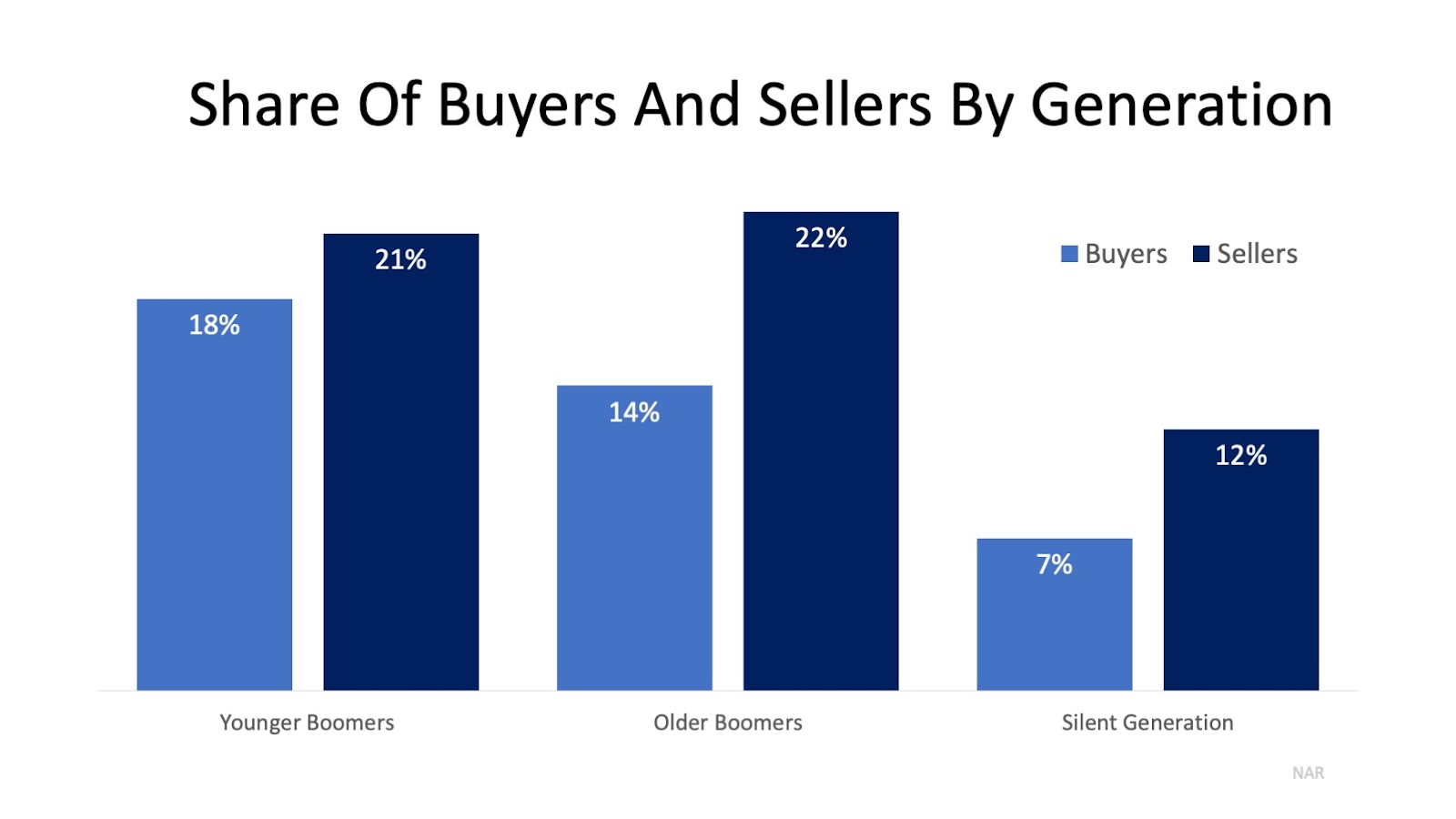
This, however, does not mean all seniors are staying in place. Some are actively buying and selling homes. In the 2019 Home Buyers and Sellers Generational Trends Report, the National Association of Realtors® (NAR) showed the percentage of seniors buying and selling:

Highlights from NAR’s report:

  • Buyers ages 54 to 63 had higher median household incomes and were more likely to be married couples.
  • 12% of buyers ages 54 to 63 are first-time homebuyers, 5% (64 to 72), and 4% (73 to 93).
  • Buyers ages 54 to 63 purchased because of an interest in being closer to friends and families, job relocation, and the desire to own a home of their own.
  • Sellers 54 years and older often downsized and purchased a smaller, less expensive home than the one they sold.
  • Sellers ages 64 to 72 lived in their homes for 21 years or more.

Bottom Line

According to NAR’s report, 58% of buyers ages 64 to 72 said they need help from an agent to find the right home. The transition from a current home to a new one is significant to undertake, especially for anyone who has lived in the same house for many years. If you’re a senior thinking about buying or selling a home, call Team Nest Builder’s Lynn Garafola today to help you make the move as smoothly as possible.  

Originally published on tapinto.net. by Lynn Garafola.

Posted in Home